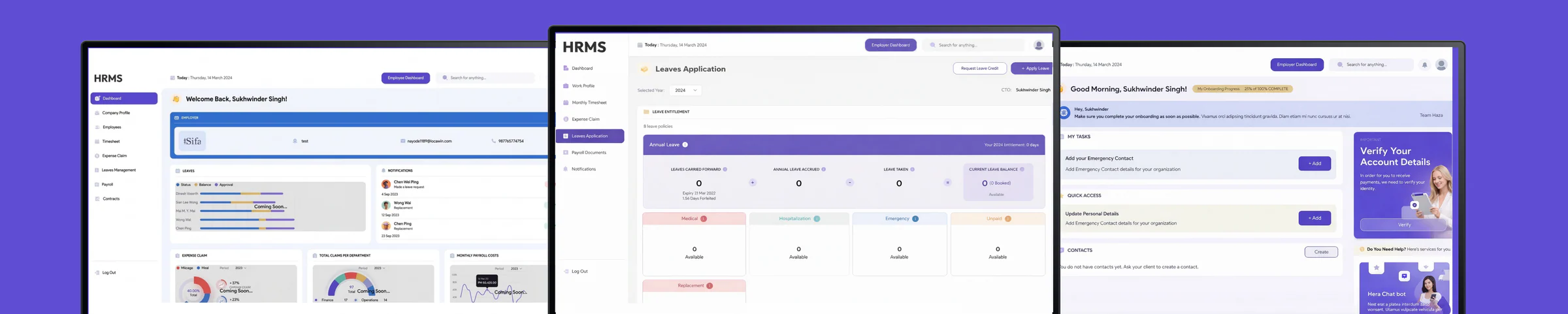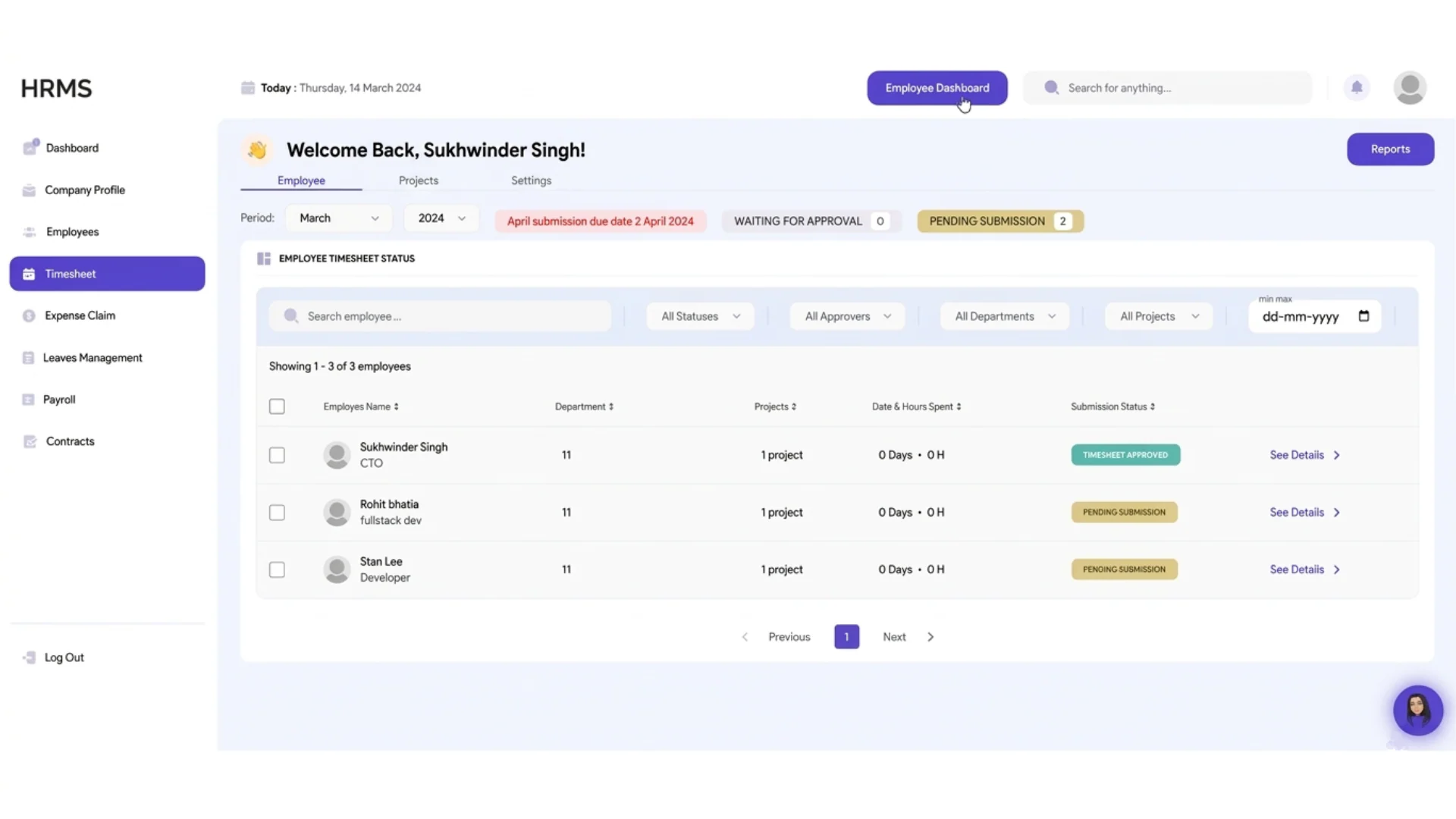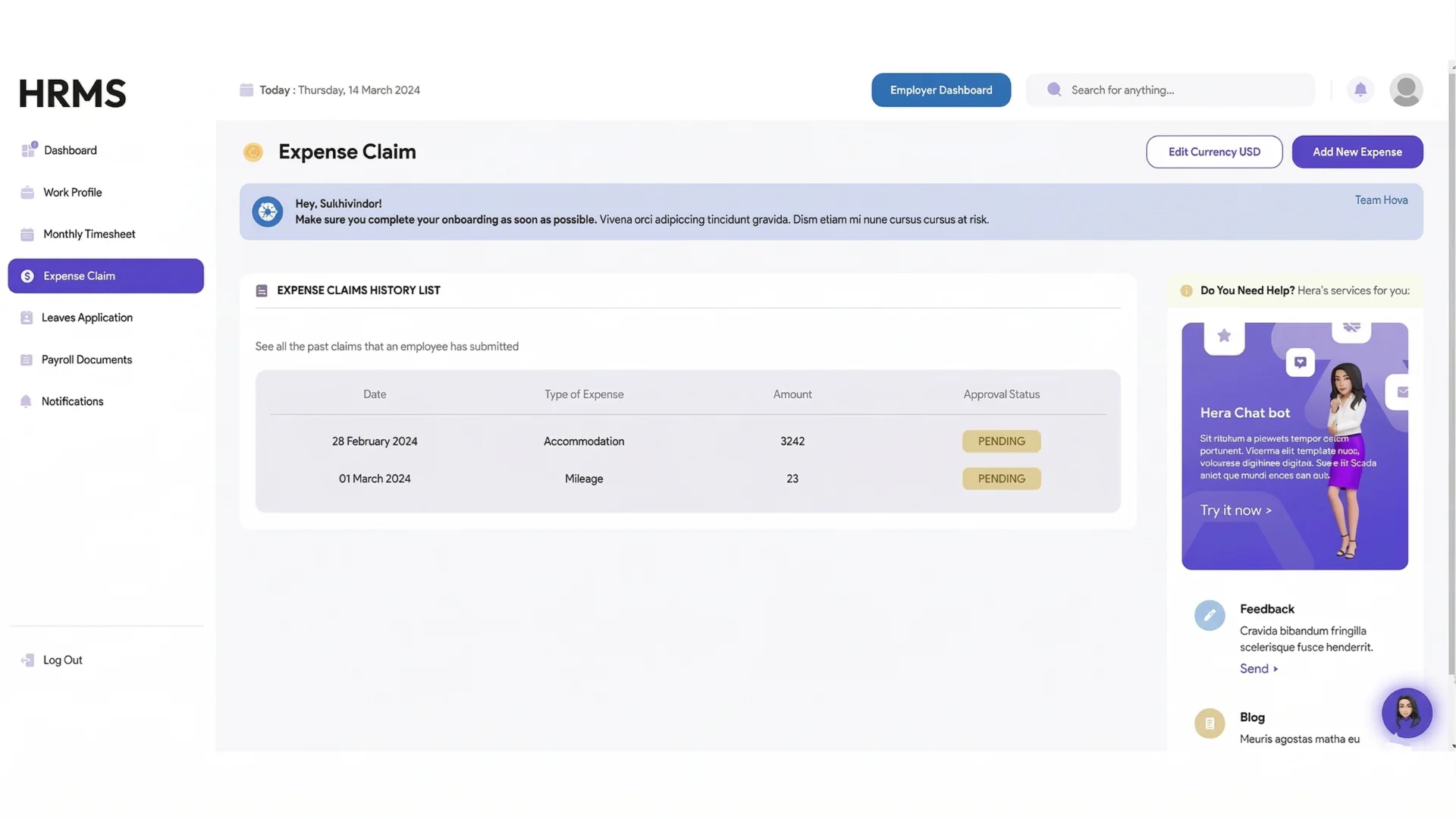
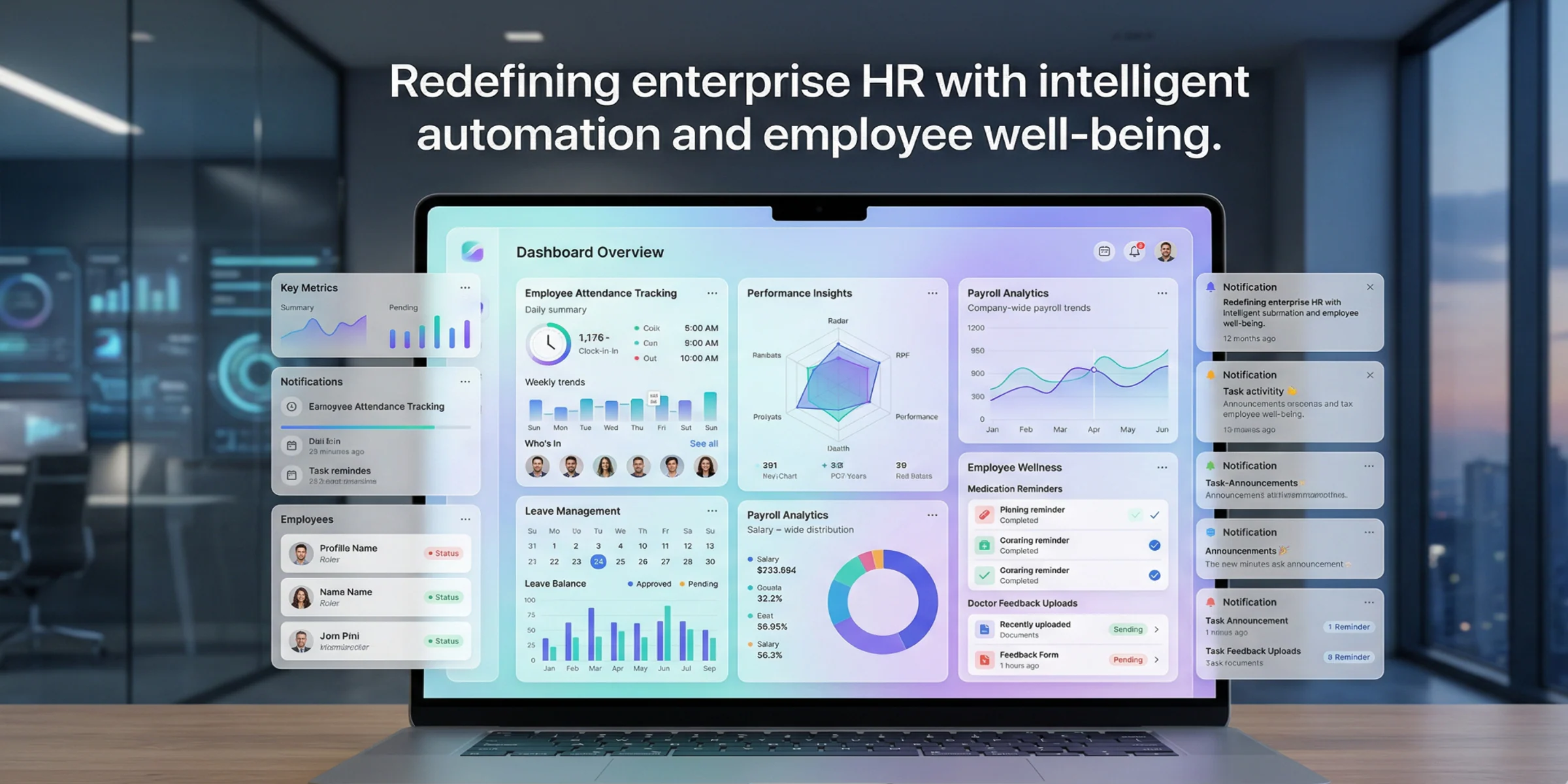
The organization needed a modern HRMS that could reliably handle attendance, leave, payroll, document generation, chatbot support, and employee wellness. Their processes were fragmented, inconsistent, and difficult for employees and HR teams to trust.
Enterprise
HRMS
A unified HRMS platform with intelligent automation across leave management, document generation, chatbot support, multi-tenant permissions, and employee wellness workflows.
The full picture, at a glance
Sifars built a unified HRMS platform with intelligent automation, including a configurable leave engine, schema-driven form builder, controlled document generation system, context-aware HR chatbot, capability-level permission framework, and wellness workflows for medication reminders and doctor feedback.
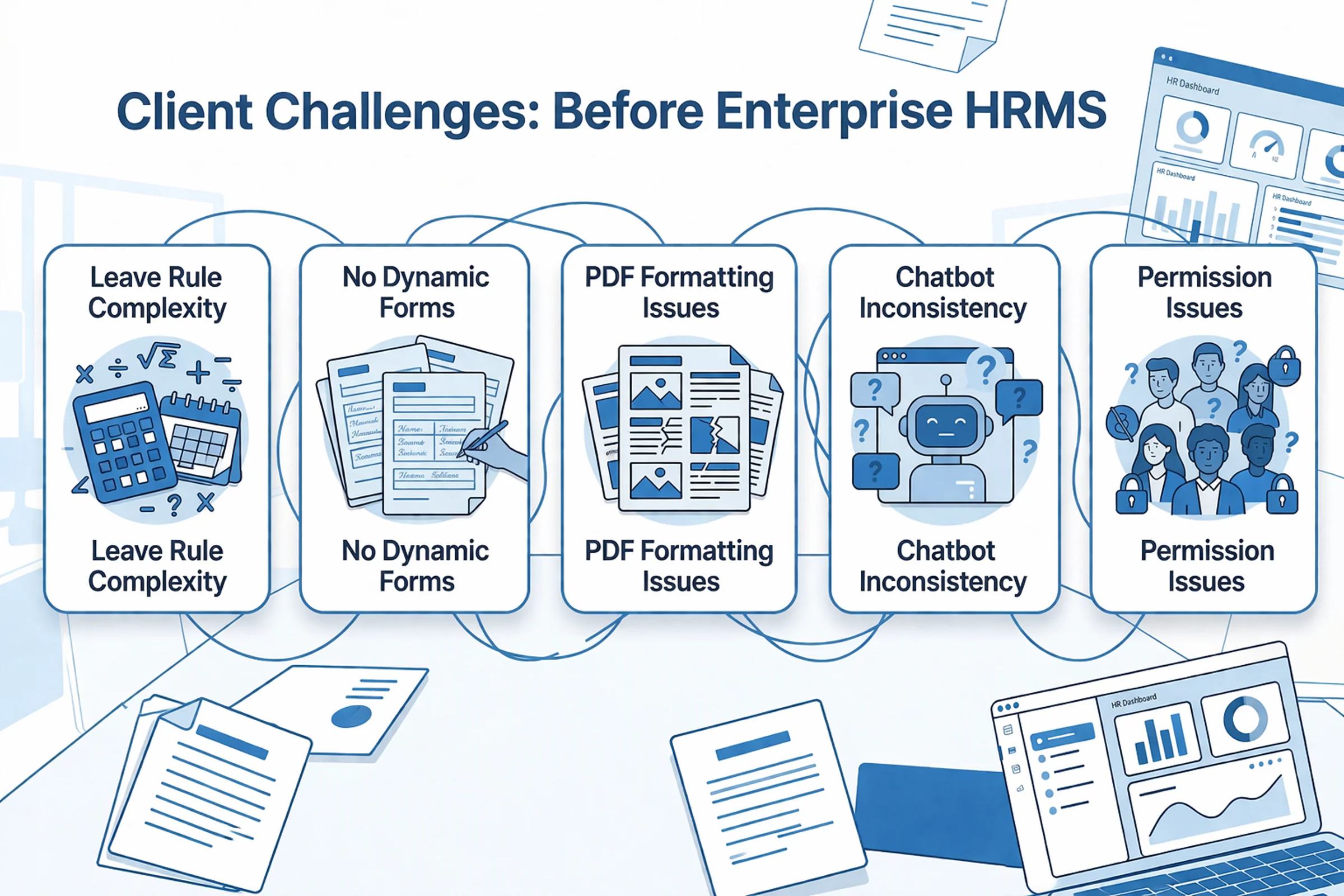
Five blockers slowing HR operations down

Leave Rules Frequently Misapplied
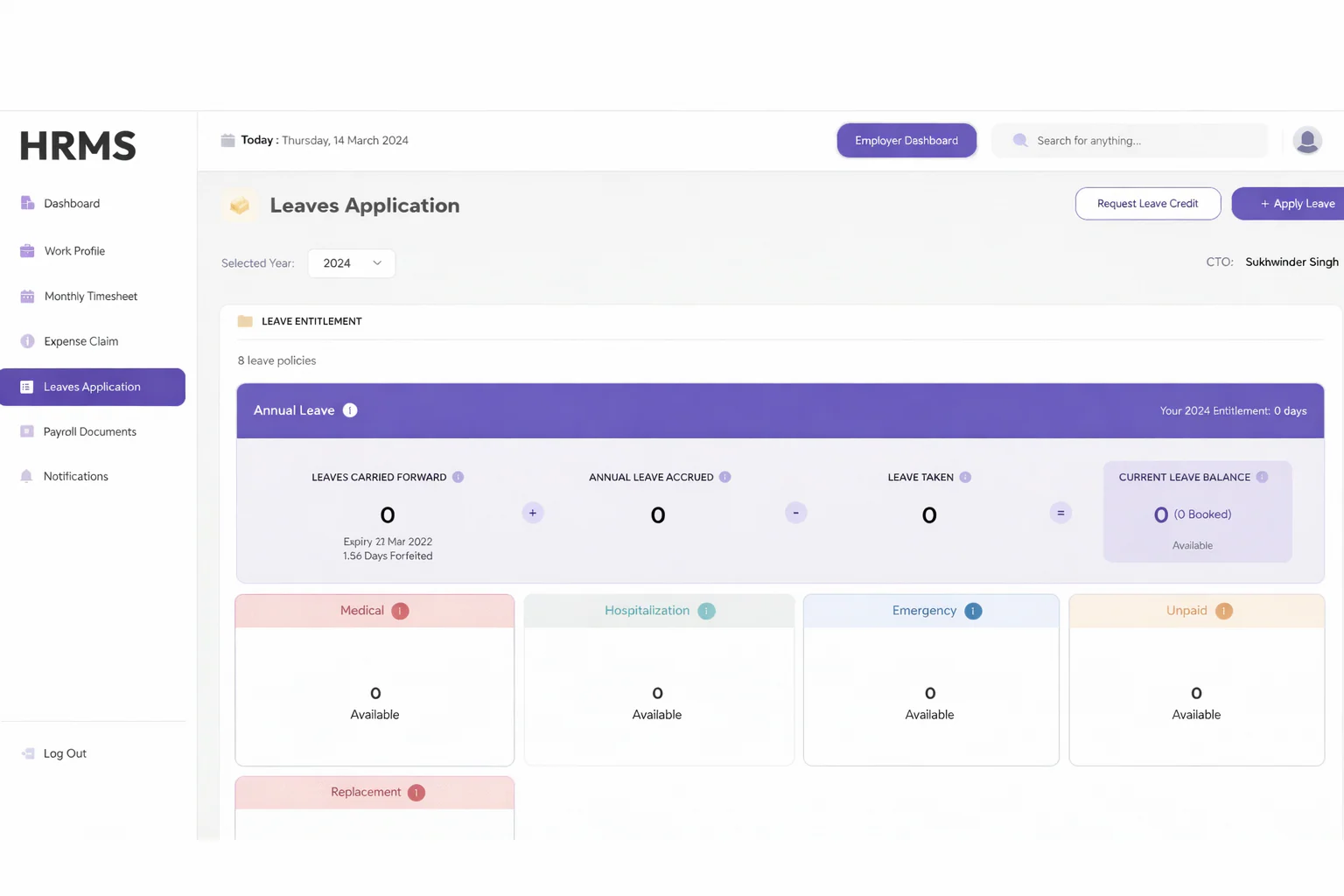
Complex accruals, carry-forward logic, and half-day versus full-day handling created repeated errors in leave calculations. HR teams spent too much time validating edge cases manually.
No Dynamic Form Generation
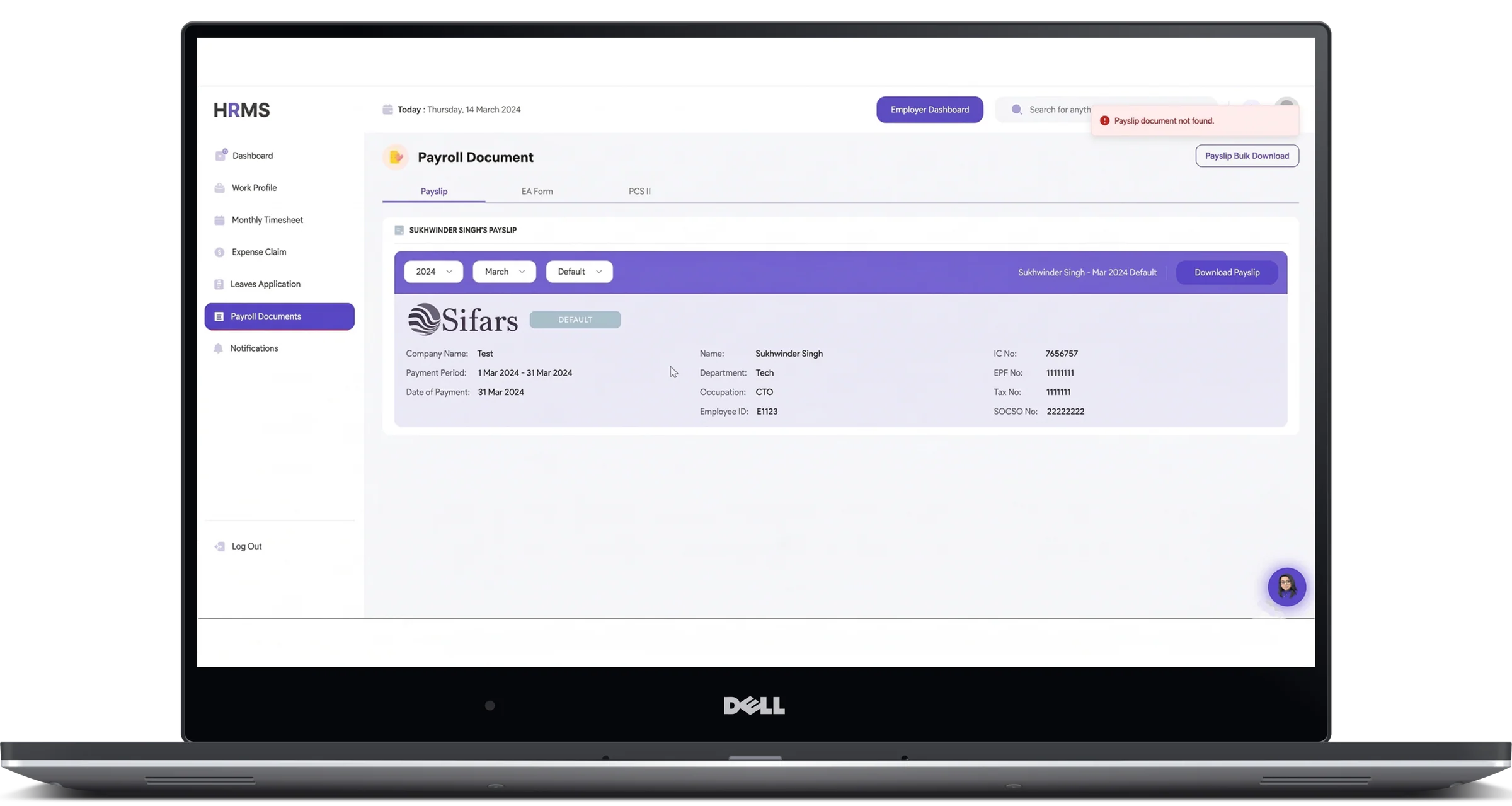
HR documents had to be created manually because the system lacked a reliable way to build dynamic forms. This made document workflows slow and inconsistent.
PDF Formatting Broke Under Dynamic Data
Documents frequently lost formatting when dynamic data or uploaded images were inserted, producing outputs that looked unprofessional and required manual correction.
Chatbot Responses Were Unpredictable
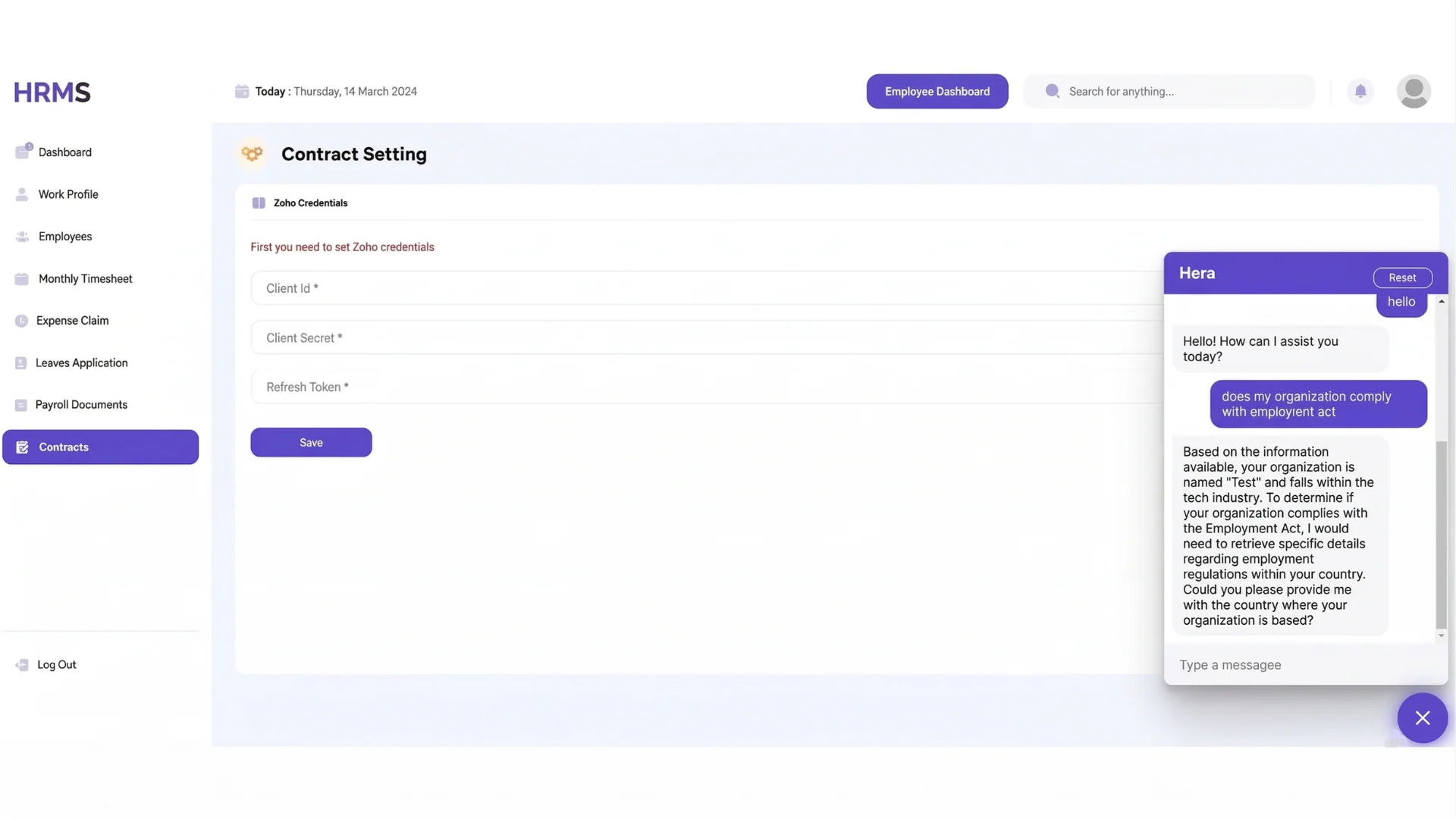
Ambiguous user intents caused the chatbot to return unreliable answers. Employees could not trust it for common HR questions, which pushed more work back to HR teams.
Multi-Tenant Permissions Were Risky
Permission boundaries across organizations were difficult to enforce consistently. Data visibility issues created security concerns and reduced confidence in the platform.
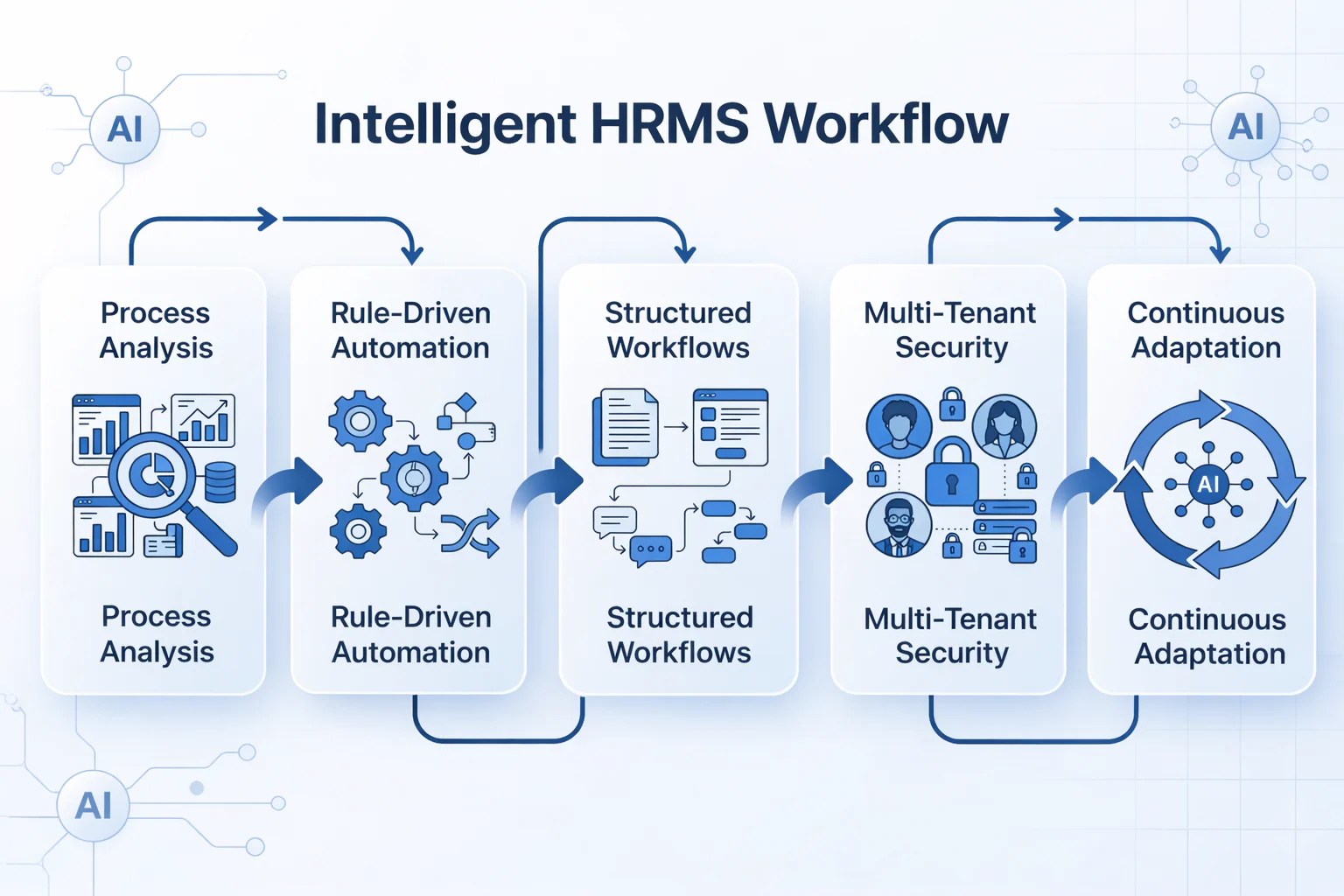
The 5-Step HRMS Implementation Workflow
From process analysis to rule-driven automation, the platform was structured to improve accuracy, adaptability, and trust across every core HR workflow.

Process Analysis
Each HR function was reviewed to identify where manual decisions caused the most errors, delays, and employee frustration.
Rule-Driven Automation
Leave handling, chatbot logic, and document workflows were rebuilt around explicit rules so the system could behave consistently at scale.
Structured Workflow Design
Documents, forms, and HR interactions were modeled in flexible workflows so the platform could adapt to organization-specific policies.
Capability-Level Security
A robust permission model was introduced to protect tenant boundaries and ensure each role sees only the right data.
Continuous Adaptation
The system was designed to evolve with policy changes and new requirements without repeated code rewrites for every organization.

Six core platform components

Fully Configurable Leave Engine
A leave engine that adapts to each company’s policy without code changes, handling accruals, carry-forward logic, and full-day or half-day scenarios consistently.
Schema-Driven Form Builder
A schema-driven form builder supporting conditional fields, nested sections, and structured workflows so HR teams can generate dynamic forms without rebuilding them manually.

Controlled Design System for PDFs
A controlled output system that keeps PDFs visually consistent even when dynamic data or uploaded assets change, reducing broken formatting and manual cleanup.

Context-Aware HR Chatbot
A chatbot that switches cleanly between payroll, leave, and document conversations, improving response quality and reducing repetitive HR questions.

Capability-Level Permission Model
A permission framework that gives each role access to the right features and records across tenants, improving security and reducing data visibility mistakes.

Employee Wellness Module
Medication reminders and doctor feedback workflows extend the platform beyond core HR administration, supporting healthier employee routines inside the same system.
Transformational Impact
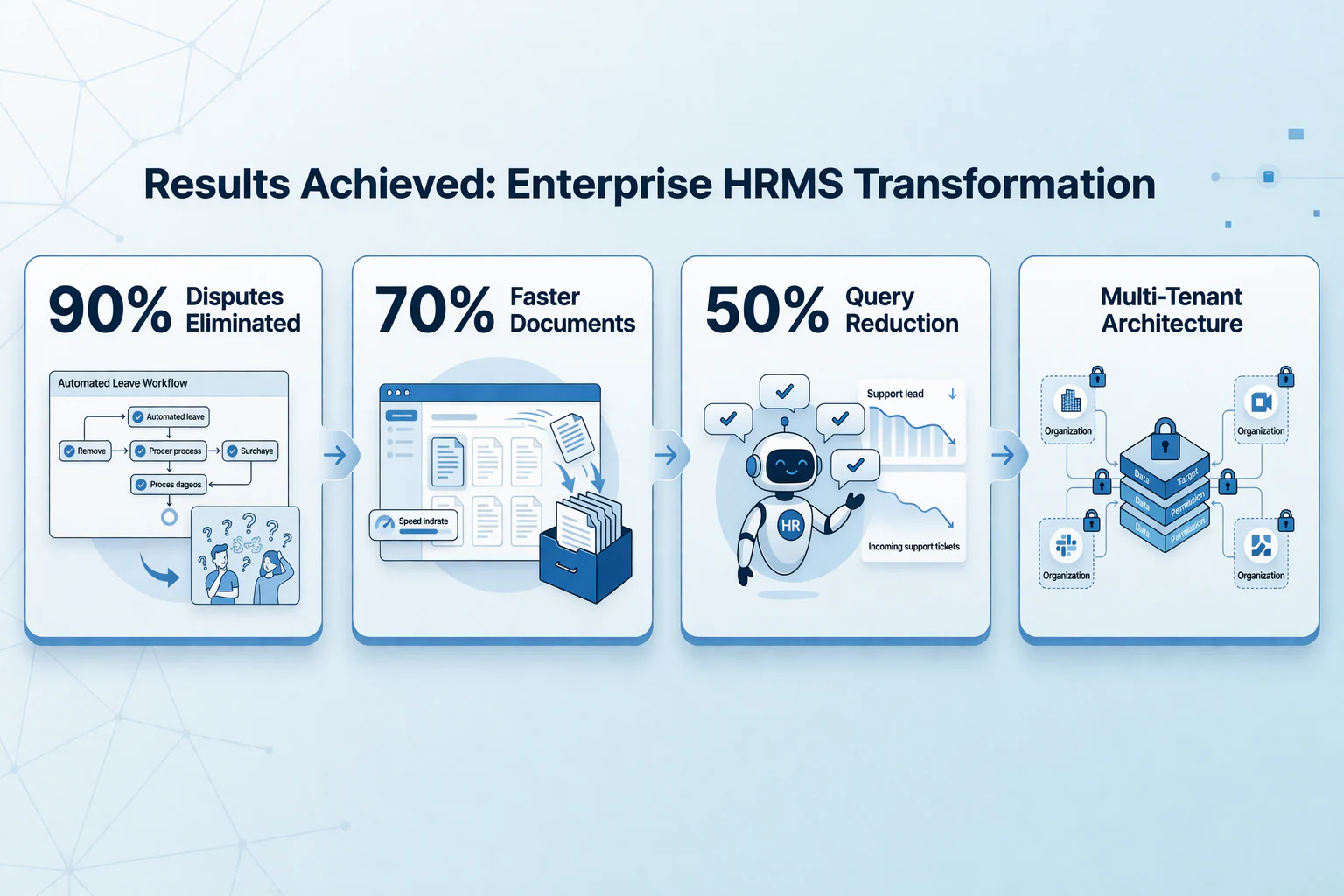
The Enterprise HRMS platform turned fragmented HR operations into a more reliable, scalable, and employee-friendly system with measurable gains across accuracy, speed, and support load.

Why Enterprise HRMS Matters
Adaptability Is Essential
HR systems must adapt to different policy structures without repeated custom development. Flexibility is what makes enterprise rollout sustainable.
Rules Build Trust
Data-driven rules reduce manual judgment calls and create consistency across leave handling, document generation, and employee support workflows.
Permission Boundaries Matter
Multi-tenant environments demand clearly defined access boundaries to preserve security, confidence, and operational correctness.
Employee Experience Counts
Wellness tracking, clean workflows, and dependable support tools improve satisfaction while reducing the day-to-day load on HR teams.