

New York businesses are moving fast toward digital transformation. From startups in Brooklyn to enterprises in Manhattan, companies are investing in tailored technology to scale operations, improve efficiency, and stay competitive. This is where choosing the right custom software development...

Most AI initiatives today are excellent at one thing: producing recommendations. Dashboards highlight risks. Models suggest next-best actions. Systems flag anomalies in real time. On paper, this should make organizations faster, smarter, and more decisive. Yet in practice, something crucial...

Nearly all AI strategies begin the same way. They focus on data.They evaluate tools.They compare models, vendors, and infrastructure. Roadmaps are created for platforms and capabilities. Technical maturity justifies the investment, and success is defined in terms of deployment and...

Enterprises today are using more AI than ever before. Dashboards are richer. Forecasts are sharper. Recommendations arrive in real time. Intelligent agents now flag risks, propose actions, and optimize workflows across entire organizations. And yet something strange is happening. For...

Many organizations adopt artificial intelligence with a simple expectation: Smarter machines will correct human mistakes. Better models. Faster analysis. More objective insights. Surely decisions will improve. But the reality is often different. Instead of quietly fixing poor decision-making, AI exposes...

In theory, Key Performance Indicators (KPIs) are designed to create focus and accountability within organizations. In practice, however, many KPIs unintentionally create distortions in behavior. Companies introduce KPIs to align teams around important performance goals. Dashboards are reviewed weekly, targets...

Most systems are built to work. Very few are built to evolve. In fast-moving organizations, technology environments change constantly—new regulations appear, customer expectations shift, and business models evolve. Yet many engineering teams find themselves rewriting major systems every few years....

Today, organizations generate and consume more data than ever before. Dashboards refresh in real time, analytics platforms record every interaction, and reports are automatically generated across departments. In theory, this level of visibility should make organizations faster and more confident...
Cloud-native architecture has become a defining concept in modern technology. Microservices, containers, serverless platforms, and on-demand infrastructure are often presented as the fastest way to scale applications while reducing infrastructure costs. For many organizations, the cloud seems like an obvious...

Artificial intelligence is advancing at an extraordinary pace. Models are becoming more capable, deployment cycles are shrinking, and competitive pressure is pushing organizations to release AI-powered features faster than ever. Yet despite rapid progress, one challenge continues to slow real...
Digital operations are usually evaluated through visible metrics such as dashboards, delivery timelines, automation coverage, and system uptime. On paper, everything appears efficient and well-structured. Yet inside many organizations, a large portion of work happens quietly in the background untracked,...

AI pilots are everywhere. Organizations frequently showcase proof-of-concepts such as chatbots, recommendation engines, or predictive models that perform well in controlled environments. These demonstrations highlight what artificial intelligence can achieve. However, months later many of these pilots quietly disappear. They...

Most organizations are excellent at measuring people. They define metrics, build dashboards, schedule performance reviews, and track targets continuously. Working hours, output levels, utilization rates, and KPIs are often treated as indicators of productivity. From the outside, performance management appears...
Faster payments have transformed the financial services landscape over the past decade. Real-time settlement systems, instant transfers, and always-on payment rails have dramatically reshaped customer expectations and competitive dynamics. For banks, FinTech companies, and payment platforms, speed is no longer...
Automation has become the backbone of modern FinTech operations. From instant payment processing and real-time fraud detection to automated onboarding and compliance checks, technology allows financial services companies to operate faster and at greater scale than ever before. For many...

Many organizations today are rich in activity but poor in momentum. Teams manage full calendars, handle multiple initiatives simultaneously, and remain constantly connected through meetings, messages, and customer requests. From the outside, productivity appears high. Yet internally, many leaders sense...

Leadership dashboards are everywhere. Executives use them to monitor performance, risks, growth metrics, and operational health during boardroom meetings and quarterly reviews. In theory, dashboards bring clarity, align teams, and support data-driven leadership. Yet despite the growing presence of dashboards,...
Artificial intelligence has advanced rapidly in healthcare. AI-powered tools can analyze medical images, support clinical decisions, and predict patient outcomes with impressive accuracy. In many cases, these systems match or even exceed human performance in controlled testing environments. Yet despite...

FinTech companies are designed for rapid growth. Faster payments, instant lending decisions, and seamless digital experiences are no longer competitive advantages they are basic expectations. However, many FinTech platforms discover an unexpected challenge as transaction volumes increase. Instead of improving...

Speed, scale, and efficiency define modern FinTech platforms. Automation sits at the center of this transformation. It powers everything from payments processing and customer onboarding to compliance monitoring and real-time decision systems. From automated KYC checks to transaction monitoring, automation...

Many companies blame performance problems on visible factors such as limited resources, slow teams, outdated technology, or increasing market pressure. To improve productivity, organizations invest heavily in new tools, infrastructure, and talent. Yet despite these investments, many businesses still feel...

Digital transformation has become a top priority for businesses across industries. Companies invest heavily in cloud platforms, automation tools, analytics systems, and artificial intelligence in order to become faster, smarter, and more competitive. However, despite these investments, many digital transformation...
For many organizations, legacy systems are considered a tolerable inconvenience. They may be slow, outdated, and difficult to maintain, but as long as they continue functioning, modernization often gets postponed. Leaders typically categorize these systems as technical debt—something that can...
Many organizations assume that if a process is automated, it must also be efficient. In reality, automation is only one step toward efficiency not the same thing. When businesses automate a poorly designed process, they simply move faster in the...

In large organizations, productivity challenges rarely come from a lack of talent or effort. Instead, they emerge from operational friction—systems that are difficult to use, workflows that do not match how teams actually operate, and interfaces that force employees to...
Technical debt is a challenge that almost every growing company eventually faces. Unlike financial debt, however, it does not appear on balance sheets or revenue reports. At first, it rarely seems dangerous. A quick workaround to meet a deadline.A new...
Finance teams have always operated under intense pressure. Tight reporting deadlines, complex regulatory requirements, endless reconciliation cycles, and zero tolerance for errors define daily financial operations. Over the past few years, artificial intelligence has started transforming how finance teams manage...
Legal research has traditionally been one of the most time-consuming parts of a lawyer’s job. Attorneys often spend hours or even days reviewing case laws, statutes, judgments, legal commentaries, and precedents before finding the relevant information they need. In 2025,...

For years, marketers believed the key to strong branding was simple: tell better stories. Storytelling helped brands build emotional connections with audiences. But in today’s digital world, attention is limited and competition is intense. Customers don’t just want stories anymore.They...

In the modern digital landscape, brands are not only competing for attention they are competing for trust. Advertising can create awareness, but trust cannot simply be purchased. It must be earned. This is why social proof marketing has become one...

In today’s digital economy, launching an online business is easier than ever but scaling it successfully requires the right technology. This is where AI in eCommerce business is playing a transformative role, and Shopify stands at the center of this...
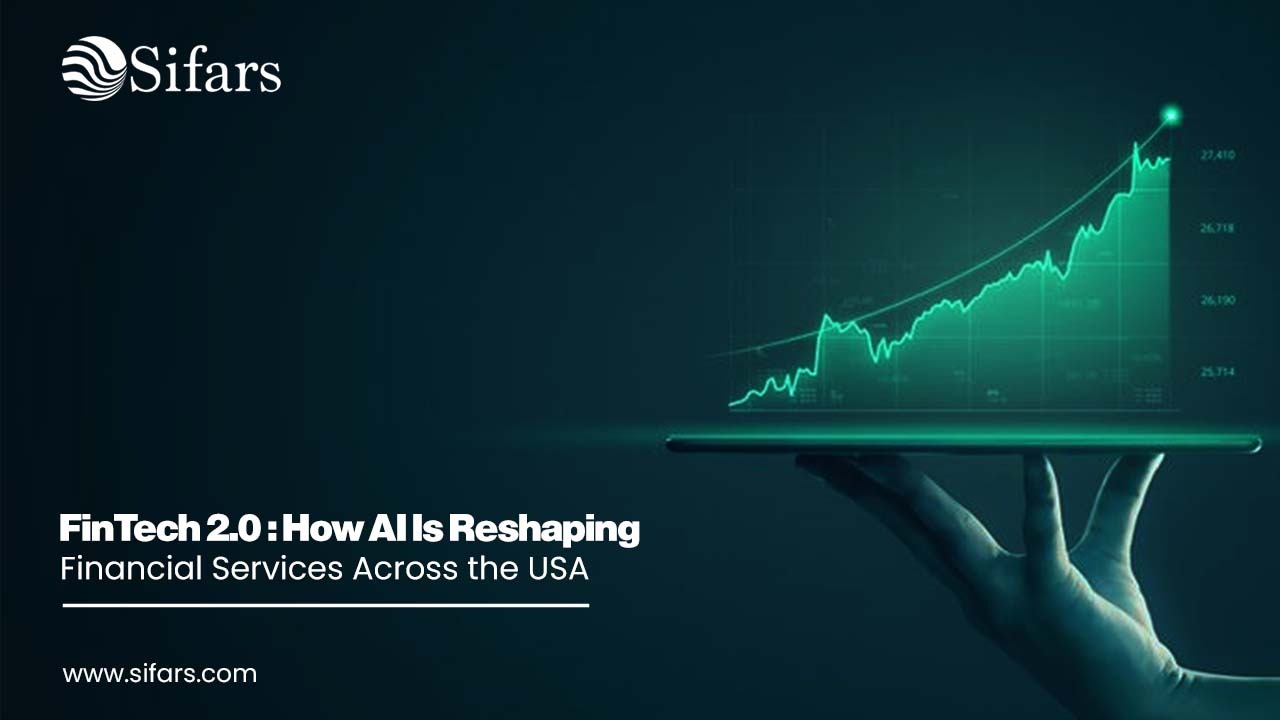
The rise of FinTech 2.0 is transforming the financial landscape, and an AI consulting company plays a crucial role in helping businesses adapt to this shift. From fraud detection to personalized banking, AI is redefining how financial institutions operate. Today,...

Why Mundane Tasks Are Holding You Back Every business, no matter how big or small, runs on a series of repetitive, time-consuming tasks. From processing invoices to managing customer inquiries and scheduling reports—these mundane activities often eat into valuable time....
The AI Shift in Customer Service In today’s hyper-competitive digital economy, customer service is no longer a “support function”—it’s a growth driver. Customers expect fast, personalized, and seamless support across multiple channels, and businesses that fail to meet these expectations...
The New Financial Rails Powering the Digital Age In today’s fast-paced digital economy, the way money moves is just as critical as the products and services businesses provide. Startups around the world are reimagining financial infrastructure—making payments faster, safer, and...
The New Growth Dilemma For decades, scaling a business meant expanding headcount. More employees equaled more output. But in today’s hyper-competitive U.S. market, companies face a paradox—demand for faster growth with fewer resources. Hiring is expensive, time-consuming, and often unsustainable,...

The New Age of Borderless Money In today’s hyper-connected global economy, money moves faster than ever before. Freelancers work across continents, small businesses source materials overseas, and corporations manage multi-currency accounts daily. Yet, traditional banks and remittance services often charge...

The Rise of Open Banking The financial services industry is undergoing one of its most significant transformations in decades, powered by open banking. At the center of this movement is Plaid, a fintech startup that redefined how businesses and consumers...

The FinTech Revolution The financial services industry has been notoriously slow to adapt to digital transformation. Traditional banks, weighed down by legacy systems, compliance overheads, and manual processes, often struggle to deliver the speed and personalization customers demand in today’s...

Introduction The world of online payments has undergone a dramatic transformation in the past two decades. In the early 2000s, businesses struggled with clunky gateways, long integration times, and limited global reach. Then came Stripe, a payment startup launched in...

The AI Advantage in FinTech Growth The FinTech revolution has dramatically reshaped the financial landscape. Over the last decade, we’ve seen startups grow from niche disruptors to global players, challenging the dominance of traditional banks and financial institutions. The secret...

The FinTech Revolution Beyond Payments Over the last decade, FinTech has evolved from a disruptive challenger to an integral part of global financial ecosystems. Initially, most of the innovation centered around digital payments, enabling faster, more convenient, and cost-effective transactions....

Why FinTech Needs a Quantum Leap The financial sector has always been a pioneer in adopting technology—whether it was mainframe computers in the 1960s, automated trading systems in the 1980s, or AI-driven fraud detection in the 2010s. Today, a new...

AI and the Democratization of Wealth For decades, wealth management and sophisticated investment advice were privileges reserved for the ultra-wealthy. Retail investors—everyday individuals investing in stocks, mutual funds, or retirement savings—were often left to rely on generic advice, traditional brokers,...

The New Age of Financial Security In today’s digital-first world, financial systems are becoming increasingly complex—and increasingly vulnerable. Cybersecurity threats, fraudulent transactions, and data breaches pose significant risks not just to consumers but also to financial institutions that must maintain...
A New Era of Banking Access For decades, billions of people across the globe have lived without access to basic financial services. According to the World Bank, nearly 1.4 billion adults remain unbanked—meaning they lack a bank account, credit history,...

The Loyalty Dilemma in FinTech The FinTech revolution has reshaped the way people manage, invest, and spend money. From mobile banking to digital wallets, robo-advisors to peer-to-peer lending, the industry thrives on innovation. But in an increasingly crowded market, customer...

Why Treasury Management Needs AI Now For decades, treasury management has been at the heart of financial stability for organizations. From ensuring liquidity to mitigating risks, treasurers play a vital role in keeping businesses resilient. But with growing economic uncertainty,...

The AI-Powered FinTech Revolution In today’s hyper-competitive financial ecosystem, the race to become a unicorn—a privately held startup valued at over $1 billion—has never been more cutthroat. FinTechs are at the center of this race, disrupting traditional banking, payments, lending,...

A Credit System Stuck in the Past Credit scores have been the backbone of financial decision-making for decades. Whether it’s applying for a mortgage, securing a business loan, or accessing credit cards, these three-digit numbers hold enormous power. But here’s...

When FinTech Meets a Smarter Breed of Cybercrime As FinTech evolves, so do the threats it faces. Cybercriminals, empowered by generative AI, now orchestrate hyper-realistic phishing attacks, AI-generated deepfakes, and automated malware campaigns. FinTech platforms, with their high transaction volumes...

The Promise of Better Credit Scoring Access to credit is foundational in the modern economy—but traditional credit scoring models are increasingly outdated. Legacy systems that rely solely on narrow credit bureau data often fail to reflect real-time borrower behavior, exclude...

The Untapped Power of Forecasting In the face of economic uncertainty, accurate forecasting is no longer a luxury—it’s a necessity. Traditional financial forecasting methods, reliant on spreadsheets or basic trend analysis, often fall short in today’s complex, volatile markets. To...

The fraud landscape has evolved—and so must the defenses. From deepfake scams and synthetic identities to “Fraud-as-a-Service” and AI-crafted phishing campaigns, fraudsters are leveraging cutting-edge technologies to create more convincing attacks. In response, businesses must adopt AI-powered fraud detection strategies...

In an increasingly competitive marketplace, pricing isn’t just about covering costs—it’s a strategic lever that shapes perception, influences demand, and defines margins. Traditional pricing models—cost-plus or rule-of-thumb discounts—no longer cut it. They fail to account for market dynamics, customer behavior,...

Every business, no matter how successful, has hidden cracks where money quietly slips away. You celebrate growing sales, new clients, or a larger workforce—but somehow, the bottom line doesn’t reflect that growth. These silent cash leaks drain profits and can...
