

New York businesses are moving fast toward digital transformation. From startups in Brooklyn to enterprises in Manhattan, companies are investing in tailored technology to scale operations, improve efficiency, and stay competitive. This is where choosing the right custom software development...

Most AI initiatives today are excellent at one thing: producing recommendations. Dashboards highlight risks. Models suggest next-best actions. Systems flag anomalies in real time. On paper, this should make organizations faster, smarter, and more decisive. Yet in practice, something crucial...

When AI projects go wrong, the diagnosis is usually the same: “The technology is too complex.” But in most organizations, that’s not the real problem. AI didn’t introduce complexity. It simply revealed the complexity that was already there. Many companies...

Today, AI is doing what it’s supposed to do in many organizations. The models are accurate.The insights are timely.The predictions are directionally correct. And yet — nothing improves. Costs don’t fall.Decisions don’t speed up.Outcomes don’t materially change. This is one...

Enterprises today are using more AI than ever before. Dashboards are richer. Forecasts are sharper. Recommendations arrive in real time. Intelligent agents now flag risks, propose actions, and optimize workflows across entire organizations. And yet something strange is happening. For...

For many organizations, artificial intelligence still sits inside the IT department. It begins as a technology initiative. A proof of concept is approved. Infrastructure is provisioned. Models are trained. Dashboards are delivered. The project is marked complete. And yet— very...
In nearly every AI conversation today, the discussion quickly turns to data. Do we have enough of it?Is it clean?Is it structured properly?Can we collect more? Data has become the default explanation for why many AI initiatives struggle. When results...
The pace of advancement in AI is mind-blowing. “Models are stronger, tools are easier to use and automation is smarter.” Jobs that had been done with teams of people can now be completed by an automated process in a matter...

In theory, Key Performance Indicators (KPIs) are designed to create focus and accountability within organizations. In practice, however, many KPIs unintentionally create distortions in behavior. Companies introduce KPIs to align teams around important performance goals. Dashboards are reviewed weekly, targets...

“Everyone is aligned.” It is one of the most reassuring phrases leaders like to hear. The strategy is clearly defined, roadmaps are shared across teams, and meetings often end with agreement and consensus. Yet despite this alignment, organizations frequently struggle...

Companies are hiring faster than ever. Every quarter brings new job roles, new titles, and new required skills. Organizations actively recruit professionals with expertise in areas such as cloud technologies, artificial intelligence, DevOps practices, data analytics, and industry-specific knowledge. Yet...

“Follow best practices.” It is one of the most common phrases used in modern organizations. Whether companies are introducing new technologies, redesigning workflows, or scaling operations, best practices are often seen as a safe shortcut to success. However, in many...
For many organizations, go-live is considered the finish line of digital transformation. Systems are launched, dashboards begin working, leadership celebrates the milestone, and teams receive training on the new platform. On paper, the transformation appears complete. However, this is often...

For decades, linear roadmaps formed the backbone of organizational planning. Leaders defined a vision, broke it into milestones, assigned timelines, and executed tasks step by step. This approach worked well in an environment where markets changed slowly, competition was predictable,...
Artificial intelligence is advancing at an extraordinary pace. Models are becoming more capable, deployment cycles are shrinking, and competitive pressure is pushing organizations to release AI-powered features faster than ever. Yet despite rapid progress, one challenge continues to slow real...

Digital operations are usually evaluated through visible metrics such as dashboards, delivery timelines, automation coverage, and system uptime. On paper, everything appears efficient and well-structured. Yet inside many organizations, a large portion of work happens quietly in the background untracked,...

AI pilots are everywhere. Organizations frequently showcase proof-of-concepts such as chatbots, recommendation engines, or predictive models that perform well in controlled environments. These demonstrations highlight what artificial intelligence can achieve. However, months later many of these pilots quietly disappear. They...
Most organizations are excellent at measuring people. They define metrics, build dashboards, schedule performance reviews, and track targets continuously. Working hours, output levels, utilization rates, and KPIs are often treated as indicators of productivity. From the outside, performance management appears...
Many organizations today are rich in activity but poor in momentum. Teams manage full calendars, handle multiple initiatives simultaneously, and remain constantly connected through meetings, messages, and customer requests. From the outside, productivity appears high. Yet internally, many leaders sense...
Leadership dashboards are everywhere. Executives use them to monitor performance, risks, growth metrics, and operational health during boardroom meetings and quarterly reviews. In theory, dashboards bring clarity, align teams, and support data-driven leadership. Yet despite the growing presence of dashboards,...

FinTech companies are designed for rapid growth. Faster payments, instant lending decisions, and seamless digital experiences are no longer competitive advantages they are basic expectations. However, many FinTech platforms discover an unexpected challenge as transaction volumes increase. Instead of improving...

Many companies blame performance problems on visible factors such as limited resources, slow teams, outdated technology, or increasing market pressure. To improve productivity, organizations invest heavily in new tools, infrastructure, and talent. Yet despite these investments, many businesses still feel...
Digital transformation has become a top priority for businesses across industries. Companies invest heavily in cloud platforms, automation tools, analytics systems, and artificial intelligence in order to become faster, smarter, and more competitive. However, despite these investments, many digital transformation...
For many organizations, legacy systems are considered a tolerable inconvenience. They may be slow, outdated, and difficult to maintain, but as long as they continue functioning, modernization often gets postponed. Leaders typically categorize these systems as technical debt—something that can...
Many organizations assume that if a process is automated, it must also be efficient. In reality, automation is only one step toward efficiency not the same thing. When businesses automate a poorly designed process, they simply move faster in the...
When organizations discuss growth challenges, the conversation usually focuses on external factors such as market competition, customer acquisition, or pricing pressure. However, a quieter problem often develops inside the organization—slow and outdated internal tools. These issues rarely appear as a...

In large organizations, productivity challenges rarely come from a lack of talent or effort. Instead, they emerge from operational friction—systems that are difficult to use, workflows that do not match how teams actually operate, and interfaces that force employees to...
Technical debt is a challenge that almost every growing company eventually faces. Unlike financial debt, however, it does not appear on balance sheets or revenue reports. At first, it rarely seems dangerous. A quick workaround to meet a deadline.A new...
Finance teams have always operated under intense pressure. Tight reporting deadlines, complex regulatory requirements, endless reconciliation cycles, and zero tolerance for errors define daily financial operations. Over the past few years, artificial intelligence has started transforming how finance teams manage...
Legal research has traditionally been one of the most time-consuming parts of a lawyer’s job. Attorneys often spend hours or even days reviewing case laws, statutes, judgments, legal commentaries, and precedents before finding the relevant information they need. In 2025,...

When organizations begin building enterprise-grade software, the first instinct is often to add more features. More dashboards.More automation.More integrations. However, in real business environments, features alone rarely create value. What truly defines powerful context aware enterprise systems is their ability...

Scaling a product is often seen as a major milestone for growing companies. However, the real challenge is not growth itself it is scaling without breaking what already works. Many organizations struggle at this stage, not because their product idea...

Artificial intelligence is no longer a technology of the future. It has quietly become a core component of how modern businesses operate, optimize processes, and scale their operations. Across industries, AI transforming business workflows is enabling organizations to automate repetitive...

In the modern digital landscape, brands are not only competing for attention they are competing for trust. Advertising can create awareness, but trust cannot simply be purchased. It must be earned. This is why social proof marketing has become one...

In today’s fast-moving digital marketplace, customers face an overwhelming number of choices thousands of apps, services, and digital tools competing for their attention. Despite this abundance, one powerful principle continues to shape buying decisions: scarcity. Limited-time discounts, countdown timers, and...
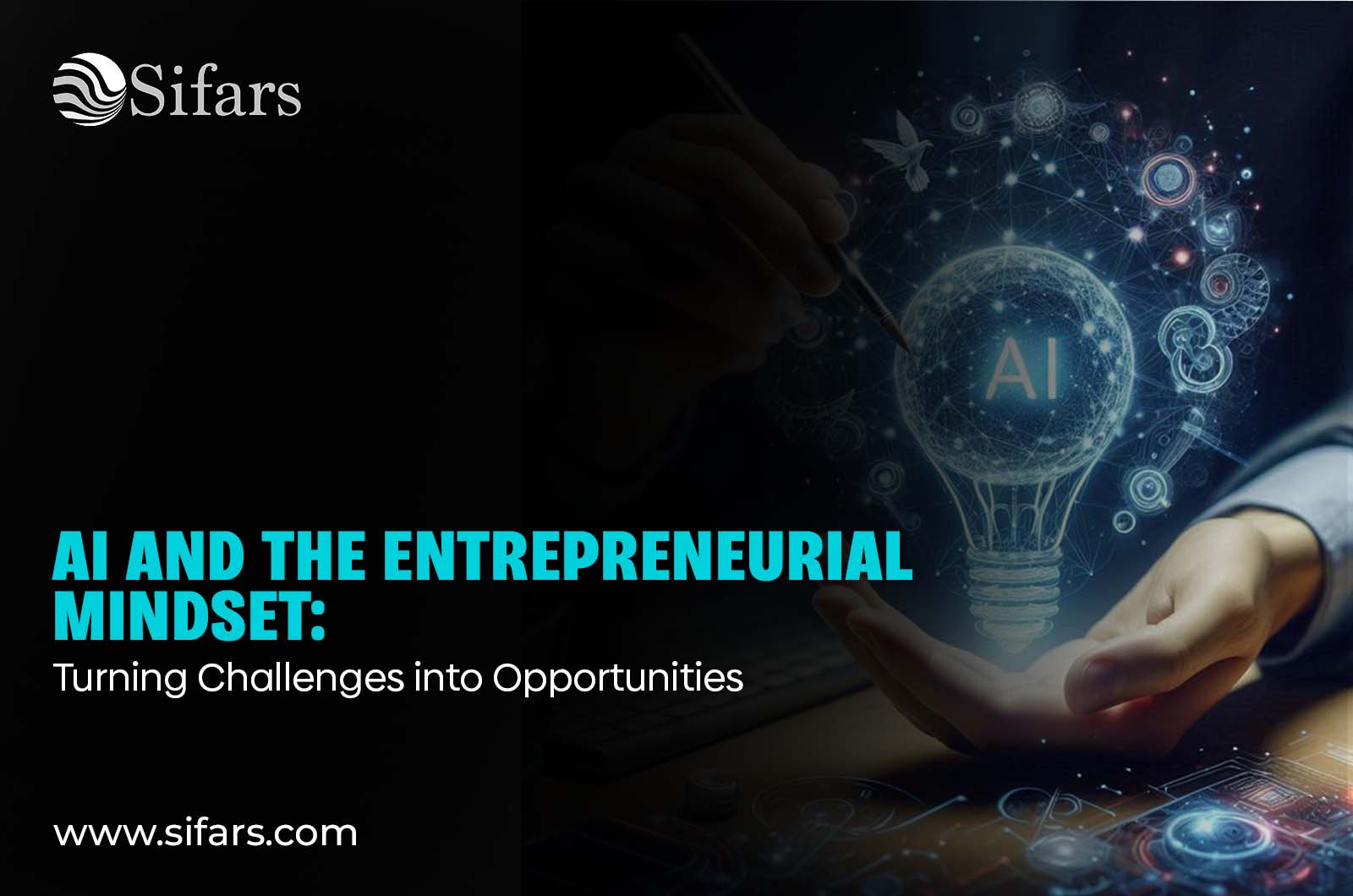
Entrepreneurship has never been a straight path. It’s exciting, stressful, unpredictable, and rewarding often all in the same week. Every founder knows the moment when everything feels possible, followed quickly by the moment when nothing seems to be working. But...

A New Chapter for AI in the Middle East Artificial Intelligence is no longer a futuristic concept; it has become an integral part of how businesses and societies function. From AI-powered chatbots to predictive analytics, AI solutions are revolutionizing industries...
